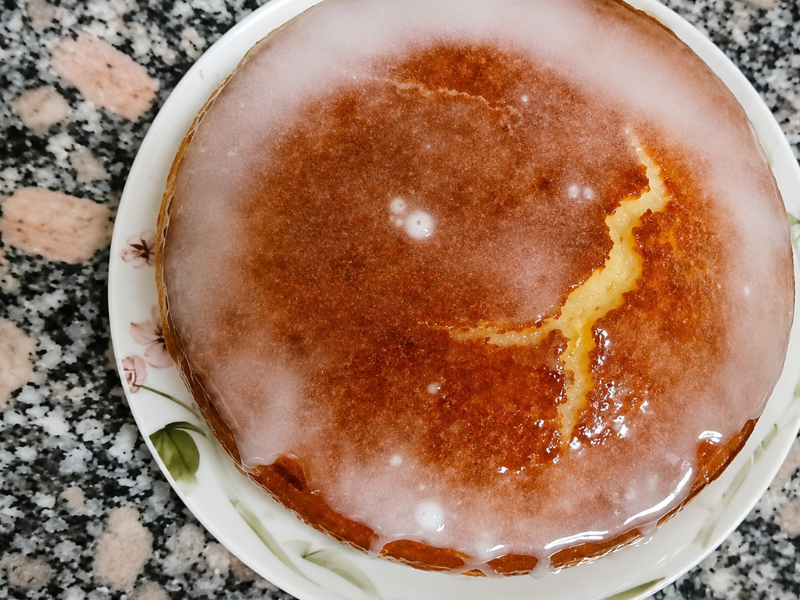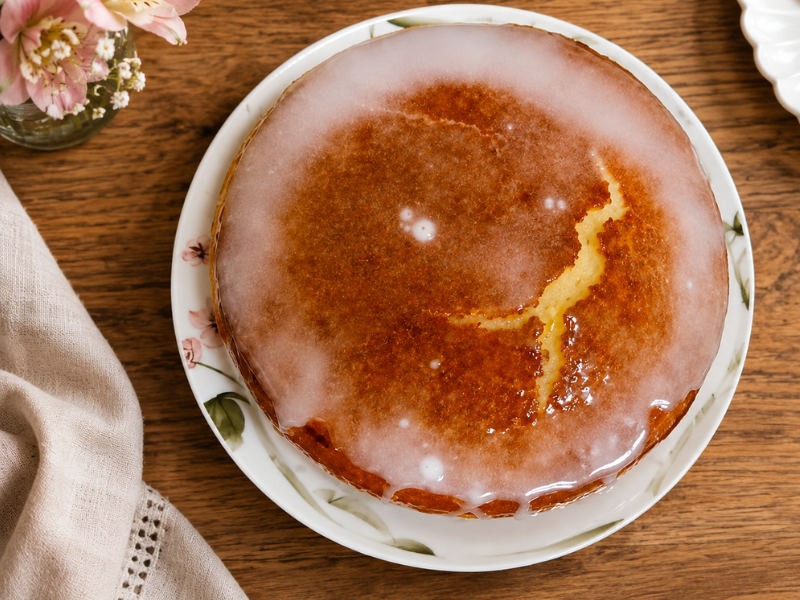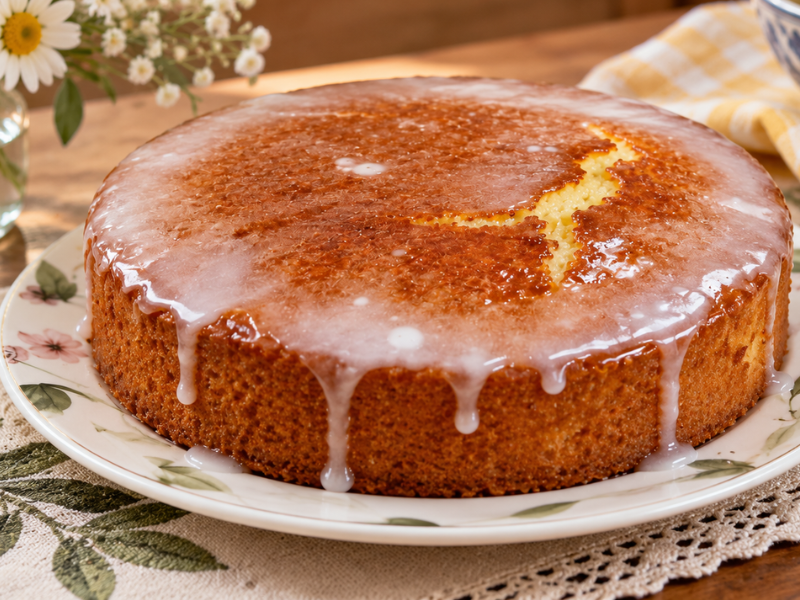
If you know me at all, you know I'm a sucker for anything lemon. This glazed lemon cake is my all-time favorite version: fluffy on the inside, with a smell that fills the entire kitchen, and a glaze that seeps into every little crack of the golden crust, giving it that sweet-tart finish that makes it impossible to stop at one slice.
This post contains affiliate links. See our disclosure for details.
What makes this cake special is that we use both the zest and the juice in the batter, then hit it again with more juice in the glaze. That double layer of citrus flavor doesn't fade in the oven. Plus, the oil in the batter keeps it moist for days (if it even lasts that long, which I doubt).
I've tested dozens of lemon cake recipes over the years. Some too dry. Others with such a faint lemon flavor they might as well have been vanilla. This is the one that earned a permanent spot in my recipe notebook, and it's the one I make every time someone asks me to bring something to a potluck, a brunch, or a get-together. It never lets me down.
Pull your eggs out of the fridge at least 30 minutes ahead of time. Room-temperature ingredients blend together much better and give you a fluffier result. If you forgot, just set the eggs (still in their shells) in a bowl of warm water for about 5 minutes.
Only zest the yellow part of the lemon, never the white pith underneath. The pith is bitter. A microplane or fine grater is your best friend here. Be generous with the zest: that's where all the essential oils and real lemon aroma live.
Don't open the oven during the first 25 minutes. The batter needs that time to set and rise. Open it too early and the center can sink.
Let the cake cool completely before you glaze it. If it's still warm, the glaze will melt and get absorbed into the crumb instead of sitting on top. Patience pays off here.
Always sift your flour. It seems like a skippable step, but it's the difference between a fine, even crumb and a lumpy, uneven texture.
At room temperature: covered in plastic wrap or under a cake dome, it stays perfect for 3 to 4 days. The oil in the batter helps keep it from drying out.
In the fridge: if it's hot out or you've already glazed it, store it covered in the fridge. Pull it out 20 to 30 minutes before serving so it comes back to its tender texture.
Freezing: you can freeze it without the glaze, tightly wrapped in plastic wrap inside a zip-top bag, for up to 2 months. Thaw at room temperature and glaze right before serving. The glaze doesn't freeze well because it gets sticky and loses its texture when it thaws.
Leftover slices: if you cut individual portions, wrap them separately and freeze them. That way you only pull out what you need.
Lemon and orange: swap out some of the lemon for an orange (both zest and juice) for a softer, rounder citrus flavor.
Lemon poppy seed: add 2 tablespoons of poppy seeds to the batter along with the dry ingredients. The classic lemon poppy seed cake, right at home.
With lemon curd: before glazing, spread a generous layer of lemon curd over the top of the cake, then pour the glaze over it. It's richer but absolutely stunning. Here's the recipe if you want to make your own.
Gluten-free: swap the all-purpose flour for a gluten-free blend that includes xanthan gum (like Bob's Red Mill 1-to-1 or similar). The texture changes slightly but it still works great.
Lactose-free: use lactose-free butter and lactose-free yogurt (not plant-based, which changes the texture too much). The result is practically identical.
In a bundt pan: it looks gorgeous, but keep an eye on the bake time since it may need 5 to 10 minutes less. Grease the pan really well, every single nook and cranny.
With cream cheese frosting: if you want something richer instead of a simple glaze, beat together about 3.5 oz of cream cheese with ⅔ cup of powdered sugar and a tablespoon of lemon juice. Spread it over the cooled cake.

This cake has been in my life for years. It's one of those recipes you try once "just to see" and it ends up being the one everyone asks you to make.
Don't stop at lemon, either. Try my other cake recipes like the yogurt cake.
If you make this, I'd love to know. Drop a comment or tag me on social media. Seeing your versions makes my day.
Easy lemon sponge cake recipe with powdered sugar glaze. Fluffy, moist thanks to the yogurt, and double lemon flavor. Ready in less than an hour. Perfect for snacks, breakfasts, and gatherings.
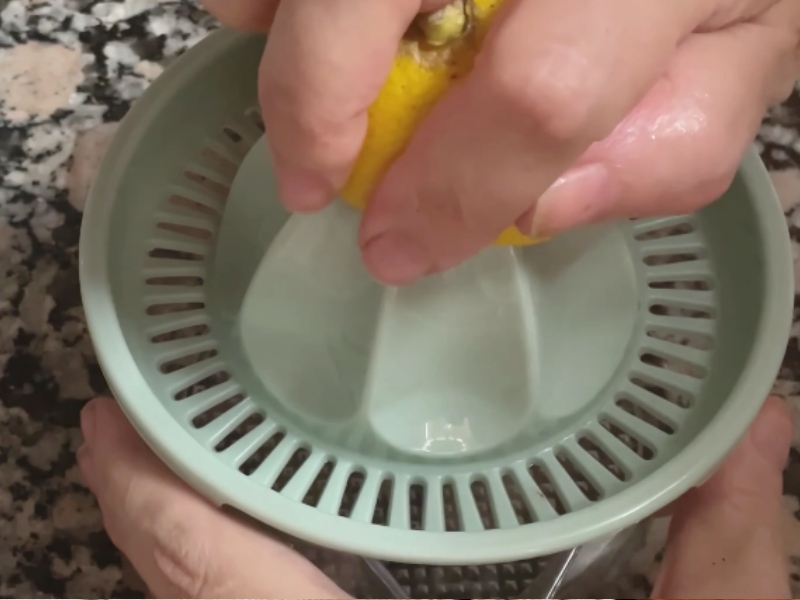
Juice your lemons. Stir the lemon juice into the milk and let it sit. It'll curdle on its own after a few minutes. That's exactly what you want.
Sift the flour and baking powder into a medium bowl. Give it a quick whisk so everything's mixed. Set it aside.

Grab a large bowl and beat the eggs and sugar with a hand mixer for 3 to 4 minutes. You're looking for a pale, fluffy mixture that's roughly doubled in size. Don't rush this part. The air you build in here is what gives the cake its lift.
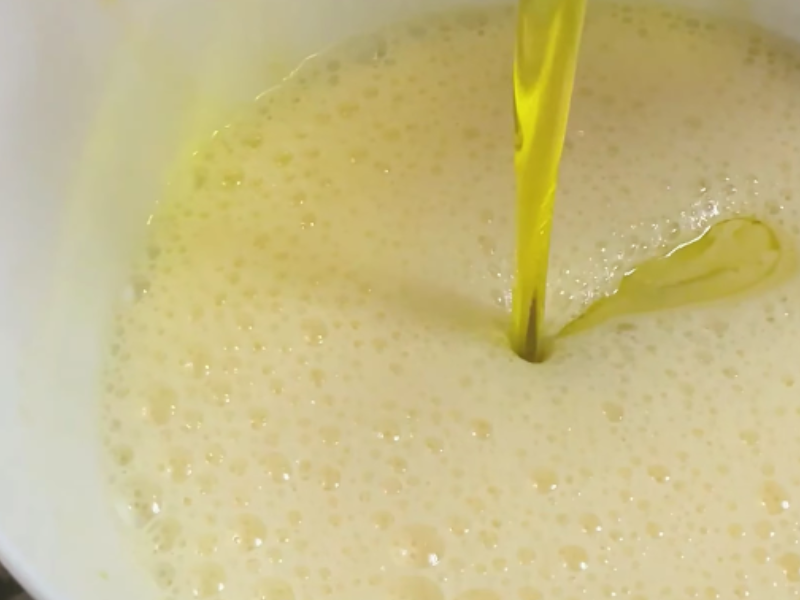
Pour in the oil, buttermilk, and lemon zest. Mix just until combined. Don't go crazy with the mixer.
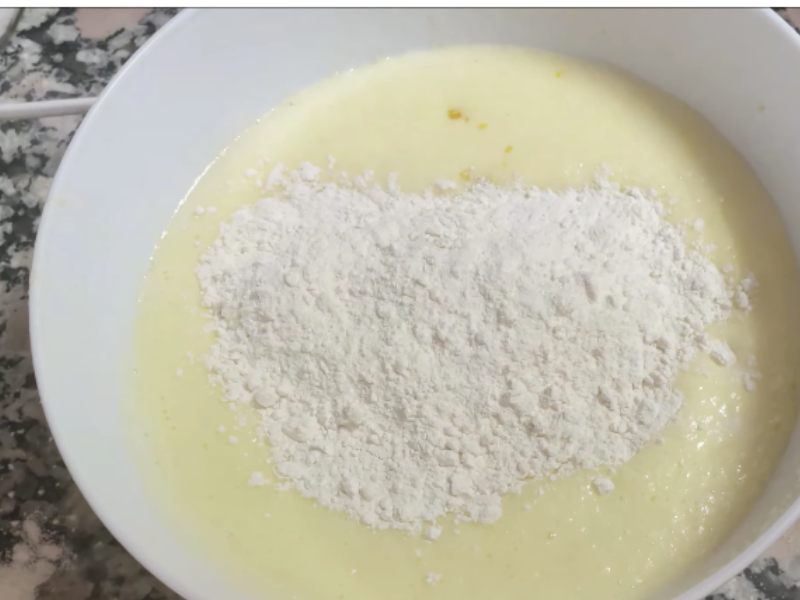
Add the flour mixture in two rounds, folding gently with a spatula each time. Scoop from the bottom, fold over the top. Stop as soon as you don't see any dry streaks.
Vierte la masa en el molde preparado y hornea a 180 grados durante 50 minutos, o hasta que un palillo insertado en el centro salga limpio (o con alguna miguita seca, pero sin masa cruda) y la superficie esté dorada. No abras el horno durante los primeros 25 minutos.
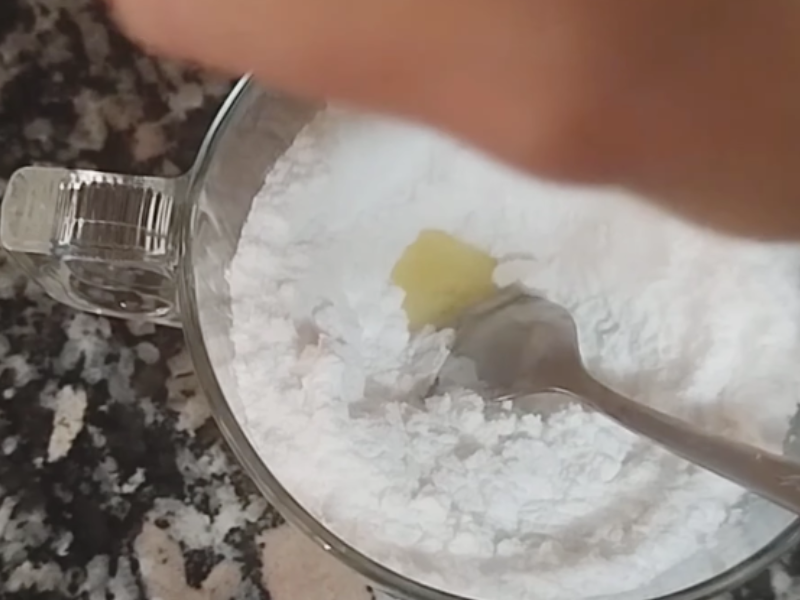
Sift the powdered sugar into a small bowl. Add the lemon juice a tablespoon at a time, stirring after each one. You want it thick enough to coat the back of a spoon but thin enough to drip.
Too thick? Few more drops of juice. Too thin? More sugar.
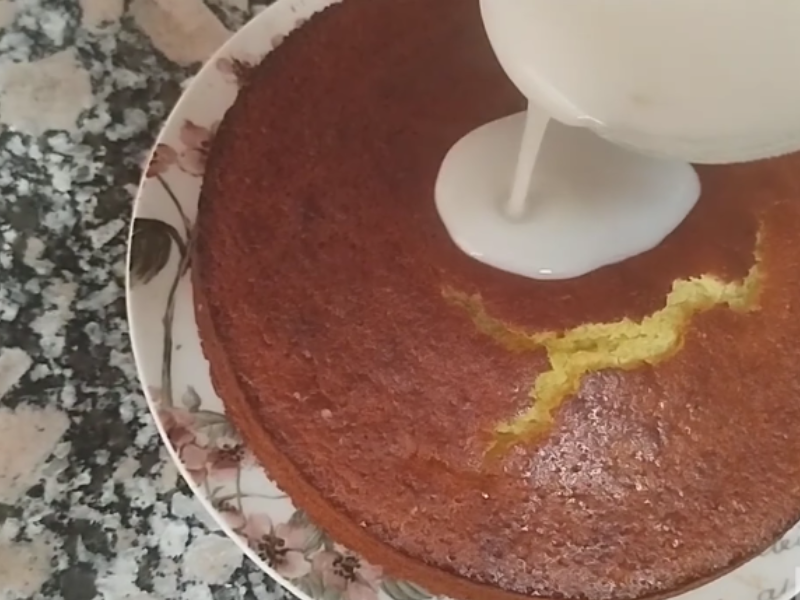
Vierte el glaseado sobre el bizcocho frío dejando que caiga por los bordes de forma natural