
Tanghulu, caramelized fruit skewers, are a true explosion of color, flavor, and texture that is winning over taste buds around the world. Originally from China, these treats—crispy on the outside and juicy on the inside—have become a viral sensation thanks to their glossy appearance, vibrant colors, and, of course, that unmistakable “crack” when you bite into them.
A Sweet Treat with Centuries of History
Although they’re now a hit on social media and at street fairs, Tanghulu have a history that dates back more than a thousand years. They first appeared during the Song dynasty in northern China and, according to legend, were created as a medicinal remedy for one of the emperor’s sick concubines. Fruits were dipped in sugar syrup to help improve her health, and the result was so delicious that it became a beloved tradition.
Traditionally, Tanghulu were made with Chinese hawthorn, a small, tart fruit similar to a wild apple. Over time, however, thanks to the creativity of cooks and street vendors, they began to appear in all kinds of versions: grapes, strawberries, bananas, kiwis, mandarins, cherries, and even pineapple or watermelon. The secret lies in that transparent caramel coating, which makes the fruit look like edible jewels.
A Spectacle of Flavor and Texture
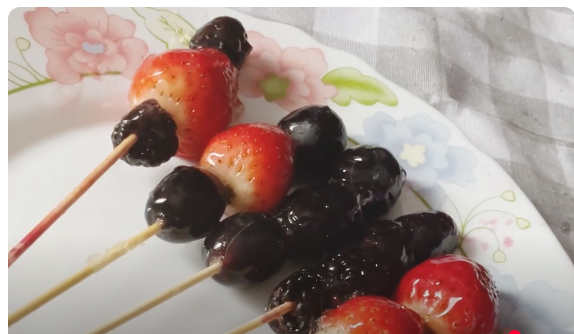
What makes Tanghulu so irresistible is its double sensory impact. With the first bite, you get a thin, hard, crunchy layer of caramel that shatters like sweet glass between your teeth. Then comes the perfect contrast: fresh, soft, juicy fruit bursting with natural flavor. That combination is simply addictive.
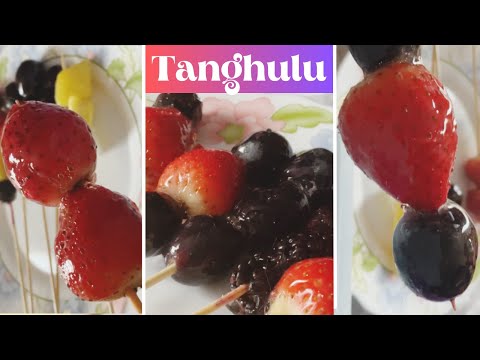
Their appearance is just as striking: shiny like crystal, colorful like a rainbow, and served on sticks like gourmet lollipops. It’s no surprise to see them at fairs, night markets, and festivals, attracting both curious glances and camera lenses. They are sweets that seduce both the eyes and the palate.
Where and When Are They Eaten?
Although Tanghulu originated in China, they are gaining popularity in countries around the world, from South Korea to the United States, as well as in Spanish-speaking countries. They can be enjoyed all year round, but they are especially popular in winter, when the cold air helps the caramel harden faster and become even crunchier.
At festivals, traditional fairs, or simply as a street snack, Tanghulu have become a culinary experience that blends the ancient with the modern. And now, with thousands of viral videos showing how to make them at home, more and more people are trying their own versions with their favorite fruits.
The Trendy Treat That’s Here to Stay
If you’re looking for an unusual sweet treat that combines tradition, beauty, and spectacular flavor, Tanghulu should be your next craving. You don’t need advanced techniques or impossible-to-find ingredients: just fresh fruit, sugar, and a little bit of magic.
Ready to make them at home? All you need is a pot, some skewers, your favorite fruit, and a desire to impress. Because yes: simplicity, when done well, can be absolutely amazing.

Tanghulu, caramelized fruit skewers
Description
Imagine fresh, juicy fruit wrapped in a thin, shiny layer of crunchy caramel. That’s Tanghulu: a traditional Chinese street sweet that has taken social media by storm thanks to its bright look, crisp texture, and irresistible flavor.
Tanghulu is a true experience: at the first bite, the caramel breaks like fine glass, and then you encounter the natural sweetness of the fruit. Contrast of textures, color, flavor… it has it all!
And best of all: you can make it at home with few ingredients and the result is as striking as it is delicious.
Ingredients
Method
-
Prepare the fruits
Wash and dry the fruits very well. It is very important that they are completely dry, since water makes the caramel not stick properly or splatter.
-
Skewer them
Place 2 or 3 pieces of fruit on each skewer stick, depending on the size. Set aside.
-
Make the caramel
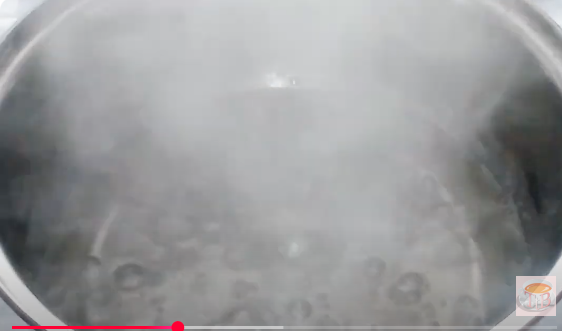
In a saucepan, put the sugar and water over medium-high heat. Do not stir with a spoon: just let it dissolve and form the caramel. It takes about 8-10 minutes. It should reach about 150 °C (if you have a kitchen thermometer, perfect), or until you see that it is liquid and slightly golden.
Drop a little caramel into cold water; if it hardens immediately and cracks, it’s ready.
-
Coat the skewers
Carefully, dip each skewer into the caramel and turn it to coat all the fruit. Shake off the excess with a gentle twist.
Place the skewers on parchment paper or a lightly greased tray until the caramel hardens (it only takes a few minutes).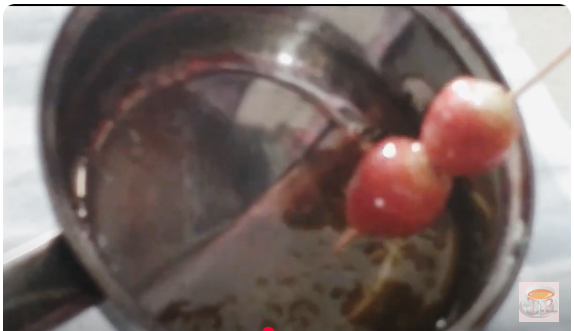
-
Let it cool

Nota
Traditionally it is made with Chinese hawthorn (a fruit similar to acerola), but at home you can use many other fruits:
-Strawberries
-Grapes
-Blueberries
-Pieces of apple, kiwi, mango, or pineapple
-Cherries
-Mandarin segments
Ideally, the fruits should be firm, fresh, and well dried so that the caramel sticks well.