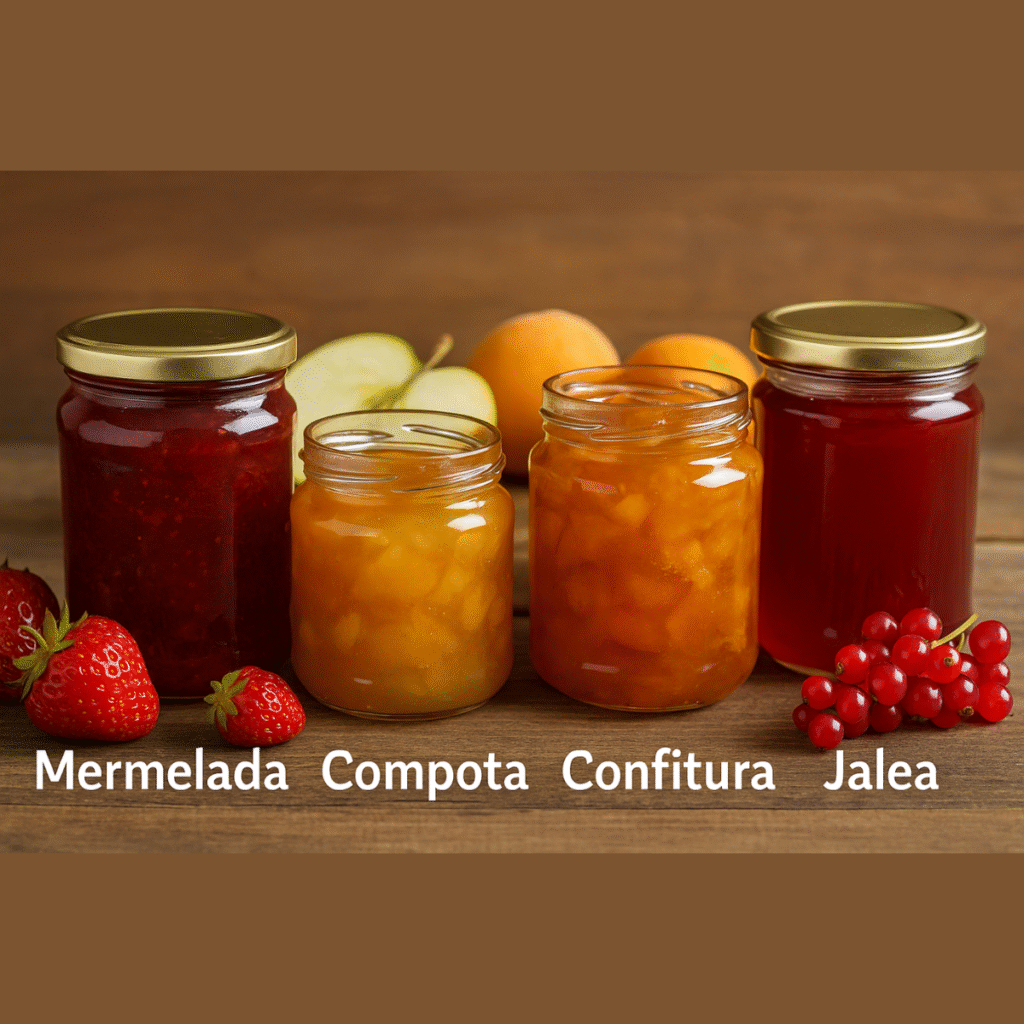
Today we’re talking about the difference between jam, compote, preserves, and jelly, because there’s no way I’m the only one who mixes them up. While we’re at it, we’ll go through step-by-step recipes, storage tricks, and tips for getting all the natural flavor out of your fruit. So here we go!
Have you ever wondered what exactly separates jam from compote, preserves, and jelly? I have, but I can’t be the only one who’s stood in the supermarket aisle, or in the kitchen with a pot full of fruit, thinking, “Wait, is this jam or is this preserves?” …right?
The sweet art of transforming fruit.
There’s something almost magical about turning fresh fruit into something you can keep and enjoy for months. Every jar is a little time capsule, holding on to the taste of summer, the smell of the garden, or that afternoon you spent cooking while it rained outside. That jar could hold jam, preserves, jelly…
We tend to use the names interchangeably, but each preparation has its own essence, texture, and purpose, so I’m going to try to break them down in this post. Not because it’s important, but because learning something new is always nice, since I’m pretty sure the vast majority of us will keep calling preserves “jam,” or the other way around. Habit is stronger than we give it credit for, don’t you think?
Jam: the queen of breakfast.
What jam is.
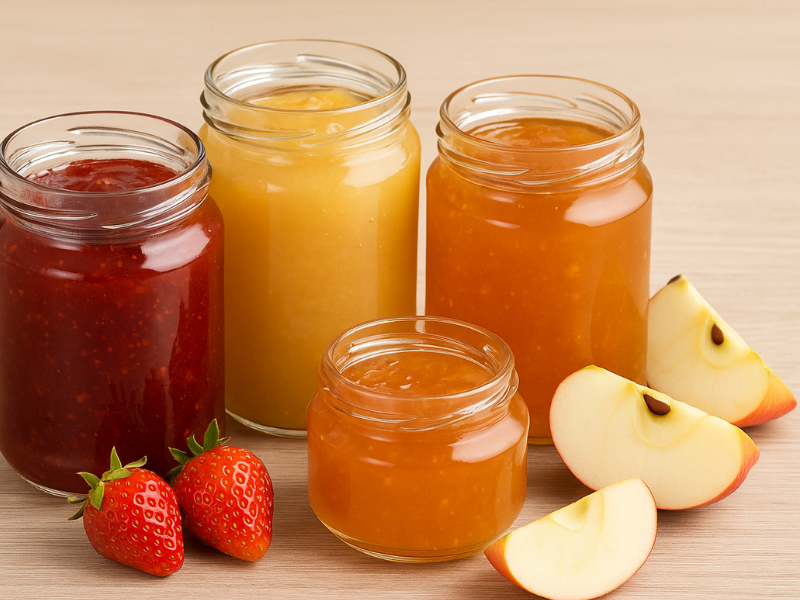
Jam is probably the best known and best loved of the bunch. It’s made with chopped or crushed fruit and sugar, cooked down until it turns thick and glossy.
Its charm lies in the balance between sweet and tart, and in that mix of soft pieces and thick juice that makes it so hard to resist.
How to make homemade jam.
Ingredients:
- 2 pounds ripe fruit (strawberries, apricots, peaches, plums, or whatever you like).
- 2 1/2 cups sugar (about 500 g).
- Juice of half a lemon.
How to make it:
- Wash, peel, and cut the fruit into small pieces.
- Put it in a large pot along with the sugar and the lemon juice.
- Let it sit for an hour, or overnight in the fridge, so the fruit releases its juices.
- Cook over medium heat, stirring now and then, until it thickens. This usually takes 30 to 40 minutes.
- To check whether it’s ready, put a small spoonful on a cold plate. If it wrinkles a little when you run your finger through it, you’re there.
If you want a smoother texture, blend it briefly before jarring. If you’d rather feel the little pieces of fruit, leave it just as it is.
Preserves: the fancier, glossier version.
What preserves are.
Preserves are like jam’s refined sister. They’re also made with fruit and sugar, but the difference is in the texture: the fruit is cooked whole or in large pieces and kept in a thick, clear syrup.
They look glossier in the jar, and the fruit usually stays whole or close to it.
How to make homemade preserves.
Ingredients:
- 2 pounds firm fruit (figs, cherries, pears, apricots, peaches).
- 3 1/2 cups sugar (about 700 g).
- Juice of one lemon.
How to make them:
- Wash the fruit, peel it if needed, and cut it into large pieces.
- Put it in a pot with the sugar and the lemon juice.
- Cook over very low heat, stirring gently so you don’t break up the fruit.
- Once the syrup thickens and the fruit looks glossy, turn off the heat.
- Transfer to sterilized jars and let cool.
The result is a firmer texture, with whole pieces bathed in a golden, silky syrup.
Compote: the taste of simplicity.
What compote is.
Compote is the homiest of the four, the humblest and most comforting. It isn’t trying to last for months or look shiny, it’s there to bring warmth and aroma right now. You make it with chopped fruit, sugar or honey, and a little water or juice, cooked until soft and juicy.
It’s perfect as a dessert, as a side, or as a base for pies and yogurt bowls.
How to make homemade compote.
Ingredients:
- 2 pounds apples, pears, or plums.
- 2 or 3 tablespoons sugar or honey (optional).
- 1 cup water or orange juice.
- Cinnamon or vanilla to taste.
How to make it:
- Peel and cut the fruit.
- Put it in a pot with the sugar, the water, and the spices.
- Cook over low heat for 20 to 25 minutes, until the fruit is soft.
- Serve warm or cold.
If you want to keep it for a few days, store it in the fridge in an airtight container.
Jelly: the translucent jewel.
What jelly is.
Jelly is the most delicate and the most brilliant of them all. It’s made only with the juice of the fruit, no pulp and no pieces, which gives it a soft-set, almost see-through texture.
The flavor is intense and clean, perfect alongside cheese, meat, or toast.
How to make homemade jelly.
Ingredients:
- 2 pounds fruit (apple, quince, grapes, currants).
- Sugar (the same amount as the juice you get).
- Lemon juice.
How to make it:
- Cut the fruit into pieces, skin and seeds included.
- Cover with water and cook until soft.
- Strain through cheesecloth or a fine mesh strainer without pressing, so you’re left with just the juice.
- Weigh the liquid and add an equal amount of sugar.
- Cook until it sets to a soft, gel-like consistency once cooled.
Fruits with more pectin, like apples or quince, are ideal for jellies that set on their own.
Differences between jam, compote, preserves, and jelly
| Preparation | Base | Texture | Shelf life | Sugar | Best for |
| Jam | Chopped fruit | Thick, with pieces | Long | Medium | Breakfast, desserts |
| Preserves | Whole fruit or large pieces | Glossy and firm | Long | High | Pies, cheese boards |
| Compote | Fruit cooked with water | Soft and juicy | Short | Low | Dessert or side |
| Jelly | Fruit juice | Gel-like and translucent | Long | High | Cheese, meat, bread |
How to store your sweet preparations.
The secret to storing them well comes down to sterilizing and sealing. Here’s how to do it, step by step:
- Wash the glass jars and lids with hot, soapy water.
- Boil them for 15 minutes, or put them in the oven empty at 250 °F for 10 minutes.
- Fill the jars with the hot mixture, leaving about half an inch of headspace.
- For long-term storage, process the sealed jars in a boiling water bath (10 to 15 minutes for pint jars, adjusting for altitude), which is the method food safety folks recommend here. Let them cool undisturbed and check that every lid has sealed.
- Once cool, store the jars somewhere cool and dark. If a jar didn’t seal, just keep it in the fridge and eat it first.
Properly canned jams, preserves, and jellies keep well for about a year, while compote lasts only a few days in the fridge.
Ideas for enjoying each one.
- Strawberry jam with fresh-baked bread, or with plain yogurt.
- Fig or peach preserves with aged cheese or ricotta.
- Warm apple compote with cinnamon and a little whipped cream.
- Quince jelly with fresh cheese, or on crunchy toast.
Each one has its moment and its own kind of magic, and they all share something: a love for making the most of what nature gives us.
Frequently asked questions.
Can I use less sugar?
Yes, though it will affect how long it keeps. You can swap part of the sugar for honey, agave syrup, or unrefined cane sugar, but store those jars in the fridge and eat them sooner.
Why doesn’t my jam thicken sometimes?
The fruit may be low in pectin, or it may not have cooked long enough. Add a little apple or lemon juice to help the texture along.
Can I mix different fruits?
Of course. The best combinations come from intuition: strawberry with rhubarb, peach with basil, or pear with vanilla.
Which fruits are best for jelly?
The ones rich in pectin, like apple, quince, grapes, currants, or citrus.
Can they be made without sugar?
Yes, but you’ll need a natural thickener like agar-agar or powdered pectin. They won’t keep as long, so store these in the fridge.
I still remember the first time I made jam. I had a basket of strawberries that were nearly past their prime and I couldn’t bring myself to toss them, so I put them in a pot, added sugar and lemon, and within minutes my kitchen smelled like childhood.
Ever since, I repeat the ritual every season: peaches in summer, apples in fall, oranges in winter.
No rush, no noise, just the bubbling sound of fruit becoming something else.
Then comes that moment when you fill the jar, close it, and think: there’s a little piece of time saved in here.
Knowing the difference between jam, compote, preserves, and jelly isn’t just a technical matter. It’s understanding that every recipe has its own rhythm, its own purpose, its own feeling. In the end what counts is that you have something delicious and that you used up every last piece of fruit, keeping it out of the trash.
Jam holds on to slow Sundays, preserves celebrate summer, compote comforts cold afternoons, and jelly shines like a sweet memory.
So which is your favorite: jam, compote, preserves, or jelly? Tell me in the comments which one you usually make, or which one brings back the most memories. I’d love to hear from you.