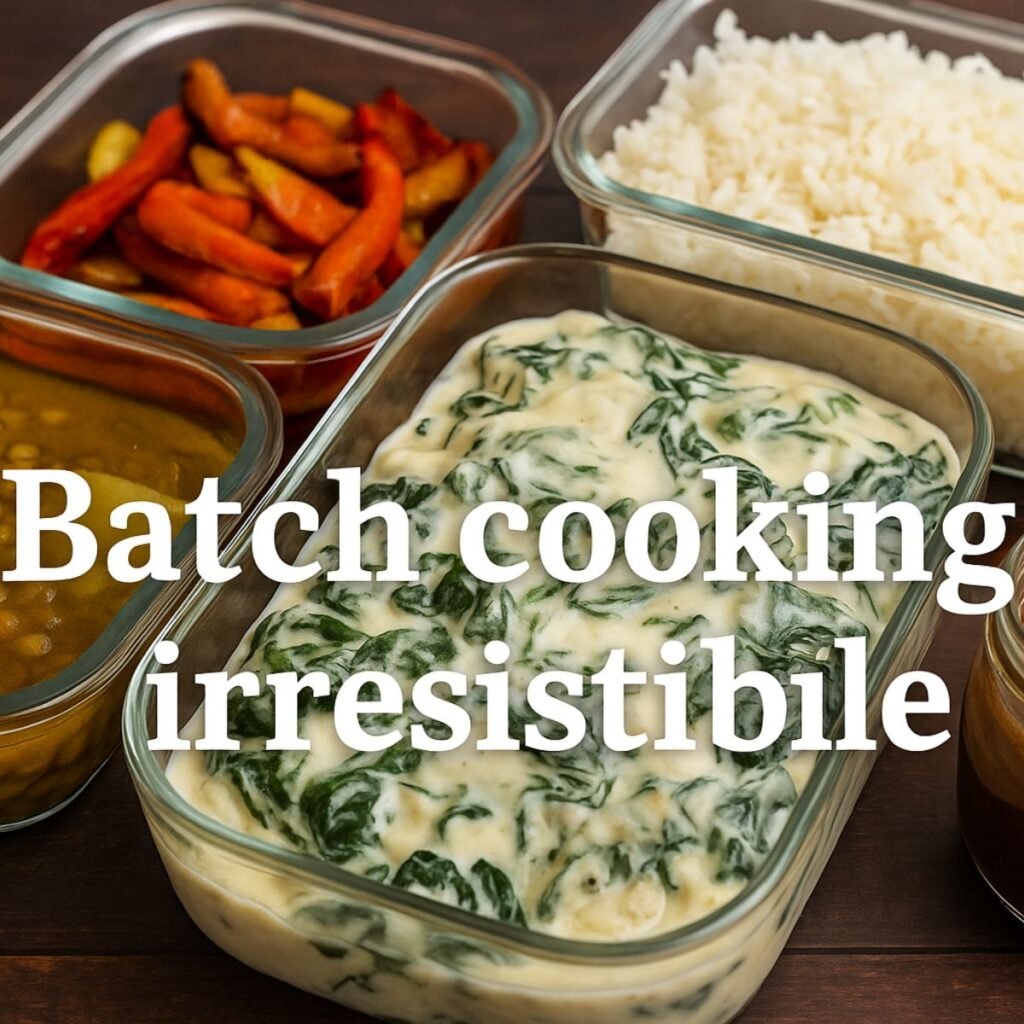
A complete meal prep guide, made easy and organized. Learn how to plan, cook, store, combine, and enjoy your meals all week without the stress. Includes tricks, ideas, frequently asked questions, and the keys to eating better while saving time and money.
There are stretches when cooking every single day starts to feel like a weight. The afternoon rolls around and your head starts in with the eternal questions. What am I making tomorrow? What’s for dinner? What’s even in the fridge? Some days you’ve got four random things, zero energy, and zero interest in inventing something. That’s normal. It happens to all of us.
Then one day you find out there’s a kinder, more practical, much more relaxed way to cook, and that way is meal prep, also known as batch cooking.
Meal prep isn’t only a time-saving technique. It’s a way of taking care of yourself, getting organized, and breathing a little easier. It’s walking into the kitchen and finding the food ready, or nearly ready, with nothing to improvise. It’s the feeling of being helped out by a version of yourself who thought ahead about your own wellbeing.
Once you try it, you understand why so many people rave about it.
What meal prep really is, and why it changes how you cook
Meal prep is as simple as cooking several components ahead of time that you can then combine into full meals through the week. It isn’t new, even if it has a modern name now. It’s the same idea people have always used when they cooked one big pot of something meant to last several days. What we’ve done is adapt it to our own pace, modernize it, and make it more flexible.
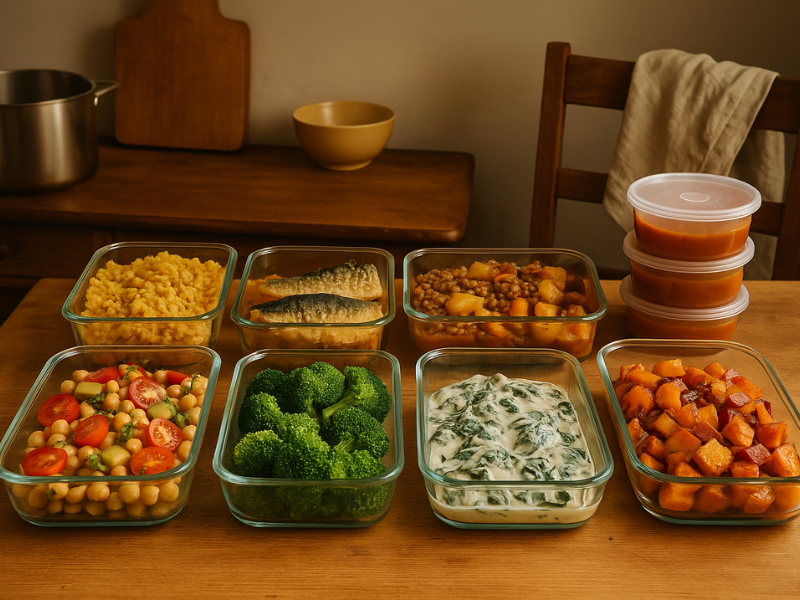
Meal prep isn’t about making finished, repetitive dishes. The idea is to prepare building blocks you can mix in different ways. Rice, say, plus roasted vegetables, cooked beans, a puréed soup, and a protein. With just those, you can build a huge number of different meals across the week. It’s like having a small home buffet waiting in the fridge.
The best part is the relief. Knowing it’s all handled. Knowing you won’t have to improvise at the last minute. Knowing you’ll eat well even if you come home late and worn out. There’s something genuinely freeing in that, and once you try it you realize how much it helps day to day.
The real benefits of meal prep every week
We sometimes assume that organizing our meals will be a chore, and then you see what it gives back and you understand it’s worth every minute. Here’s what you’ll feel from the very first week.
Time saved across the whole week
The obvious one is the time. You cook once and after that you barely pass through the kitchen except to reheat and plate. If you used to spend thirty or forty minutes a day getting meals together, suddenly your evenings open up and your mornings get less chaotic.
More balanced meals
Planning helps you eat better because you choose deliberately. You stop falling back on fried food, frozen dinners, or snacks the moment you’re hungry. Instead you find home-cooked, complete, varied meals already sitting there ready to serve.
Money saved
When you shop with a list and a menu in mind, you spend less. You don’t fill the cart with things you don’t need, and you throw almost nothing away because everything was planned to get used. Your wallet notices.
Less stress
For me this is the strongest benefit of all. The feeling of having it handled, of not having to think every single day about what to cook, is a real pleasure. When your head is calmer, everything else runs better.
Less waste, more use
You get more out of what you buy, you combine ingredients, and you learn to reuse leftovers creatively. Throwing food out stops being routine.
Variety all week long
A good set of building blocks lets you create different meals without the sense of eating the same thing over and over. Meal prep done right never gets boring. If anything, it keeps handing you new ideas.
How to start meal prepping without overcomplicating it
Starting can look daunting, and it’s much easier than it seems. The trick is to go step by step and in a sensible order. Here’s how to do it without getting lost or overwhelmed.
Choosing the right day to cook
Pick a day when you have two or three unhurried hours. Sunday works, so does Friday evening or Monday morning. What matters is not being in a rush. Doing it calmly is far more enjoyable. That’s your big cooking day, and the rest of the week is a breeze after it.
Planning the week’s menu
Before you start cooking, think about what you want to eat. You don’t need a rigid menu, but you do need to choose your building blocks. For example: a soup, a grain, a protein, some roasted vegetables, a sauce, and a bean.
That alone gives you a lot of possible combinations.
Jot the ideas down on a sheet of paper, in a notebook, in an app, or even on something stuck to the fridge. What matters is having a small mental map of what you’re going to make.
Writing the shopping list
Once you have the plan, write down what you need. Organize the list by section so you move faster through the store. Shopping deliberately is one of the keys to meal prep, and one of the parts that saves you the most money.
Cooking in a smart order
This step matters, because it’s what lets you use your time, your oven, and your burners without losing track. Start with whatever takes longest.
Get a big pot of rice or beans going. Load a sheet pan of vegetables into the oven. While those cook, chop and sauté, make your sauces, and assemble the rest.
It all flows.
Sometimes it feels like you’re doing an enormous amount, and then you look up and half of it is already done.
Packing containers strategically
Once everything is cooked, it’s time to divide it up. Split the food into small containers for single portions, or family-sized ones for bigger meals.
Keep the building blocks separated by category so you can combine them freely. You can also pack a few containers with a complete meal already assembled, for the days when you’re really pressed.
What to cook so your meal prep actually works
Here’s a thorough guide to building a meal prep routine that’s balanced and versatile.
Vegetables for the whole week
Puréed vegetable soups
Puréed soups are perfect because they keep for days, they’re comforting, and they freeze without any trouble. Zucchini soup, carrot soup, squash soup, or a green one with spinach.
They’re fast, they’re cheap, and you always want them.
Roasted vegetables
Roasted vegetables are the jewel of meal prep. They cook themselves while you do other things. Load up zucchini, eggplant, onions, peppers, carrots, and sweet potatoes. One full sheet pan into the oven.
After that you have side dishes, salad bases, accompaniments, and complete meals with nothing more than rice or pasta added.
Quick sautés
Sautés are great because they go with everything. A little grated carrot, mushrooms, onion, and a splash of soy sauce, and you’ve got something full of flavor.
Grains that go with everything
Rice
Non-negotiable. Cooked rice is a perfect base for stir-fries, vegetable dishes, curry, or cold salads.
Pasta
Cook it ahead and either sauté it later or use it cold as a base. Pull it a minute early so it holds its texture.
Quinoa
Ideal if you want something lighter. Nutritious and very easy to make.
Couscous
Ready in five minutes. Perfect for fresh salads or quick meals when you’re out of time.
Proteins that complete a meal
Chicken
Grilled breast, roast chicken, poached chicken, or shredded chicken for tacos, salads, and rice dishes.
Eggs
Hard-boiled eggs rescue an enormous number of meals. Add them to salads, rice dishes, or use them as a fast protein on their own.
Beans and legumes
Having chickpeas, lentils, or white beans already cooked lets you build a complete meal in a minute, from salads to fast stews.
Tofu or tempeh
If you eat plant proteins, these are very versatile and they soak up the flavor of whatever sauce you put them in.
Sauces that turn simple food into something else
Homemade tomato sauce
A good tomato sauce transforms any dish. Use it on pasta, rice, chicken, vegetables, or even baked eggs.
Yogurt sauce
Light, creamy, refreshing, and perfect for vegetables, salads, and grain bowls.
Vinaigrettes
Make one big jar and you’ll never have to mix a dressing on a weeknight again.
A real example of a full week of meal prep
Here’s a practical setup that works beautifully.
Building blocks made on day one
A pot of rice.
A sheet pan of roasted vegetables.
A puréed vegetable soup.
Shredded chicken.
Cooked chickpeas.
Cooked pasta.
Hard-boiled eggs.
One homemade sauce.
Meals you can build from all that
Fried rice with chicken and vegetables.
A full chickpea salad with roasted vegetables.
Mediterranean pasta with tomato and cheese.
Chicken and vegetable tacos.
Vegetable soup with toast.
A quinoa bowl with hard-boiled egg and vegetables.
Cold pasta with yogurt sauce.
Those building blocks alone will carry you through an entire week without effort.
How to store everything so it lasts the week
Meal prep only works if you store the food properly. Here are the essentials.
Pick the right containers
Glass is the best option because it holds flavors and smells better, and it’s more hygienic. Use plastic only if it’s genuinely good quality.
Cool it before you store it
Never put hot food straight into the fridge. It raises the internal temperature and puts everything else in there at risk.
Organize by date
Put a label with the date on every container. That way you know what to use first.
Freeze whatever you won’t use soon
Beans, rice, puréed soups, cooked vegetables, and sauces all freeze perfectly.
My own tricks for making meal prep easier
Put on music or a podcast while you cook. It makes the whole thing more pleasant.
Clean as you go so it doesn’t all pile up at the end.
Use the oven to its limit. If you’re turning it on, fill it with more than one pan.
Always keep fresh ingredients on hand to combine with what you’ve made.
Always have two or three sauces ready to bring a dish to life.
Common mistakes when you’re starting out
Making too many things and exhausting yourself.
Not planning before you start cooking.
Preparing dishes that don’t combine with each other.
Not washing up as you go and ending up in chaos.
Storing everything in one big container instead of dividing it into portions.
Frequently asked questions about meal prep
Is meal prep expensive?
No. It actually saves you money.
Does it work for one person?
Yes, and arguably it works even better, because you can freeze a lot of it.
Does it take a lot of time?
Between two and three hours.
Can you do it with an air fryer?
Yes, and it’s wonderful for vegetables and proteins.
Doesn’t it get boring eating the same thing?
No, because you aren’t repeating anything if you combine the components well.
Meal prep has given me order, wellbeing, and calm. It’s a way of cooking that feels like looking after yourself. It organizes your week, it helps you eat better, it cuts your spending, and it gives you the sense that things are under control.
I recommend it to everyone, because it changes your relationship with your kitchen and with your own time.
Meal prep is a practical, kind, freeing way to organize how you eat during the week. It lets you eat better, spend less, stress less, and have more time to yourself. Once you try it, it turns into a habit that stays with you and improves how you feel without any real effort.
Do you want to try meal prep this week? Would you like me to put together a full menu by season, or one built around what you actually like to eat? I’d love to read you and help you get your meals organized so everything is easier and more appealing.