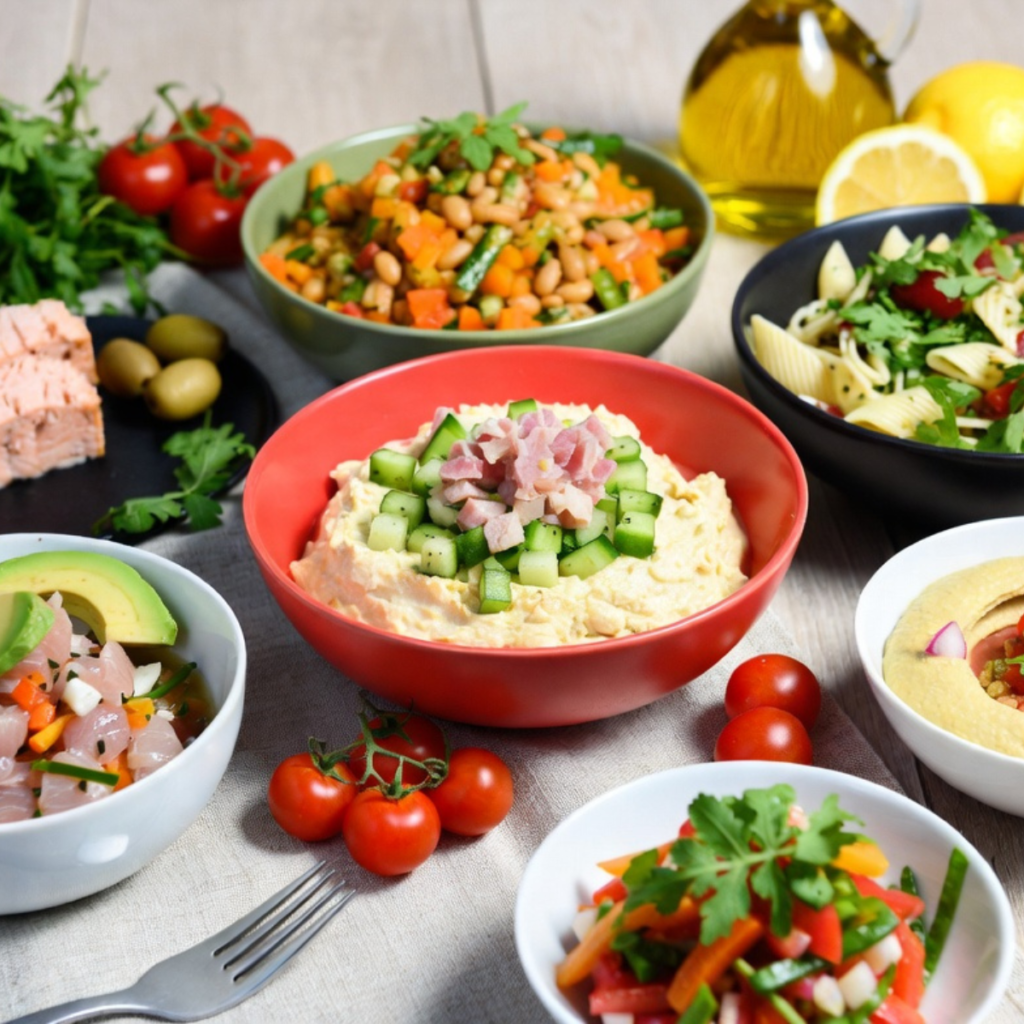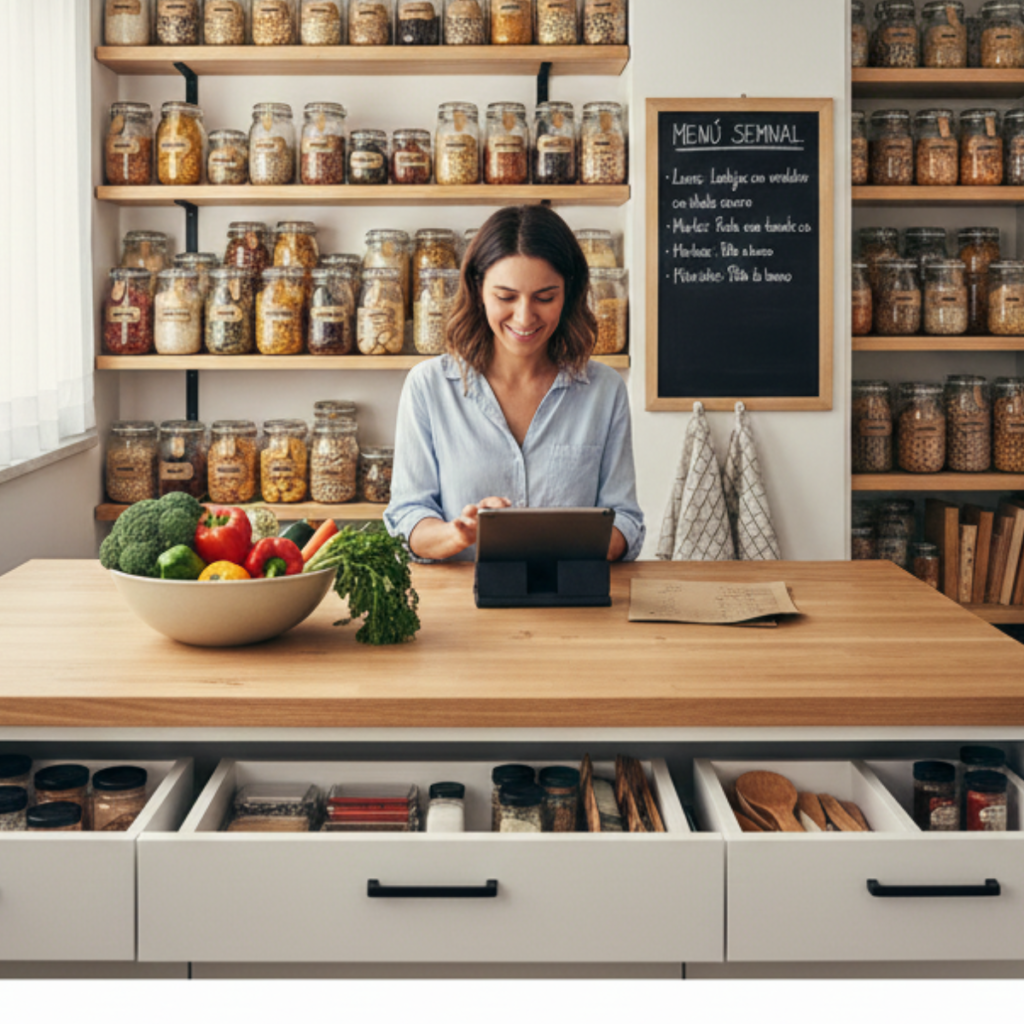
Learn to organize your kitchen like a professional and save both money and time. Discover tricks for order, pantry management, and planning that will transform your home and your budget through better kitchen organization. The change starts in your cabinets.
Has this ever happened to you? You buy a jar of paprika, get home, and discover you already had three more hiding at the back of the cabinet. It used to happen to me constantly. My kitchen was chaos, where open bags of pasta multiplied on their own and the canned goods seemed to have a life of their own.
One day, after throwing out an entire bag of vegetables that had been forgotten and gone limp in the crisper drawer, I’d had enough. I realized the mess wasn’t only a visual problem. It was costing me real money. Every time I bought something I already had, or threw out something expired, I was throwing cash in the trash.
So I decided to put in a system that would do more than make my kitchen look like a magazine spread. It would make it an efficient savings machine. And I can tell you that since I put it in place, my grocery budget has dropped by nearly 30 percent without eating any less well. In this guide I’m going to open my kitchen doors so you can do the same.
The psychology of order: why an organized kitchen makes you richer
It sounds like an exaggeration and it isn’t. When you walk into a kitchen where you know exactly what you have, your mind works differently. Order reduces decision fatigue. If you’re hungry and the kitchen is chaos, the likely outcome is ordering delivery, which is extra money, or grabbing whatever unhealthy thing is nearest.
A well-run kitchen invites you to cook. It lets you see the possibilities in ingredients you’ve already paid for. Organizing is really just taking inventory of your own resources. Start treating your pantry the way a small business treats its stockroom and you’ll begin to see the actual value of every grain of rice in it.
Step one: the great emptying, and the reality check
You can’t organize on top of disorder. To start saving, you need to know where you’re starting from. Here’s my challenge: this weekend, take everything out of your cabinets and your refrigerator. Put it all on the table or the counter.
It’s a rough moment, I know. You’ll find things that expired two years ago, dried beans that have gone damp, and those kitchen gadgets you bought on impulse that do nothing but take up room. The exercise matters, though, because it forces you to face the money you’ve lost through lack of a system. From here, the only direction is up.
Designing your operations zone: the efficient work triangle
For the organization to survive past day one, the kitchen has to be functional. Architects talk a lot about the “work triangle” between the stove, the sink, and the refrigerator.
Shorten the trips between those three points and you’ll cook faster and with less effort. When cooking is easy, you stop seeing dinner as a burden. The real savings come from consistently cooking at home, and to be consistent, your surroundings have to help you rather than fight you.
The pantry zone: your own grocery store at home
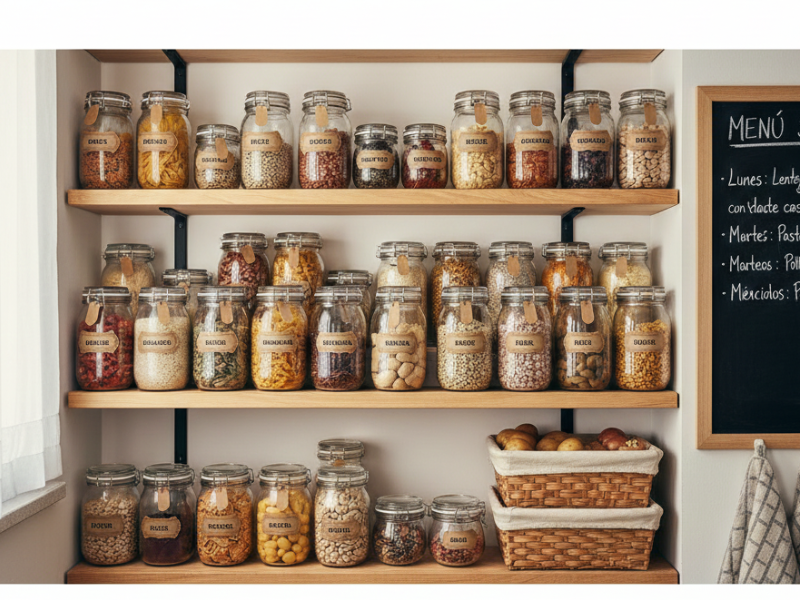
This is where the savings magic happens. A well-organized pantry is your best defense against rising prices and impulse buying. The secret isn’t having a lot of food. It’s having the right food where you can see it.
Use clear containers. This isn’t only an aesthetic thing for Instagram. When you can see that the sugar is running low or the lentil jar is getting empty, you write it on the shopping list deliberately. You avoid the “just in case” that fills carts with things nobody needs.
Master strategies for organizing a kitchen on a budget
To stock that pantry intelligently, you have to change how you shop. Here’s how I do it:
- Buy from bulk bins whenever you can. Beans, rice, nuts, and spices are much cheaper, and often better quality, when you aren’t paying for individual plastic packaging. You also buy exactly the amount you need.
- Use the FIFO rule, first in, first out. It’s what grocery stores do. Whatever went in first has to come out first. When you put the shopping away, new items go to the back and what was already there comes to the front. It sounds trivial and it prevents about ninety percent of expiration-date waste.
- Store brands versus name brands. Learn to read labels. Very often the basic product is identical, whether that’s salt, flour, or sugar. Save your budget for the ingredients where quality makes a genuine difference, like a good extra virgin olive oil or real smoked Spanish paprika.
The refrigerator
If the cabinets are the stockroom, the refrigerator is the fresh section, the one with short expiration dates and usually the biggest share of the grocery receipt. Organizing it isn’t about looking good for guests. It’s an economic survival strategy.
Thermal order: everything in its place
Did you know the temperature isn’t the same everywhere inside a refrigerator? Put the milk in the door or the meat on the top shelf and you’re shortening its life. Food that spoils is money in the garbage.
- Top and middle shelves: the most stable zone. Dairy, deli meat, and eggs go here, if you don’t keep eggs on the counter. Cooked dishes too.
- Bottom shelf, above the drawers: the coldest zone. Raw meat and fresh fish always belong here, so nothing drips down and contaminates the rest.
- Crisper drawers: designed to hold humidity. Fruit in one, vegetables in the other. Never mix them, because some fruit gives off gases that speed up the decay of vegetables.
- The door: the least cold zone, because it’s opened constantly. Save it for drinks, sauces, jams, and butter.
The eat-me-first container
This is my star trick. Always keep a small clear container on the middle shelf with a label that says “Eat me first.” That’s where I put the piece of cheese going hard, the half pepper left over from a sofrito, the yogurt that expires tomorrow. If it’s visible, you make yourself use it before opening something new. The savings by the end of the month are startling.
Meal planning: the ultimate weapon for kitchen organization
If you walk into the grocery store without knowing what you’re eating on Tuesday, you’ve already lost. You’ll buy on impulse, on hunger, or on whatever catches your eye in the aisle. Planning doesn’t make you rigid. It makes you someone with control over their own finances.
The reverse pantry method
Most people look up recipes online and then go buy the ingredients. We’re going to do it backwards. Look at what’s in your organized kitchen and find recipes that use those ingredients. If you have a can of chickpeas and half a bag of spinach in the freezer, you already have chickpeas with spinach for dinner. All you’ve spent is the time to cook it.
Meal prep to save energy and time
Turning the oven on four times a week is an unnecessary electricity bill. Spend a couple of hours on Sunday roasting vegetables, cooking beans, or making a tomato base, and you’re getting far more out of your appliances. Having food ready also kills the temptation to order something because you’re too tired.
The freezer: your time and money bank
A lot of people use the freezer for ice and frozen pizza and nothing else. Big mistake. The freezer is a serious money-saving tool once you know how to work it.
- Freeze leftover portions. Never let a serving of lentil stew wander around the fridge until it grows mold. If it’s left over, it gets frozen. That’s a free meal next week.
- Seasonal vegetables. When you see broccoli or green beans at a ridiculous price because they’re in season, buy extra, clean them, blanch them for a couple of minutes, and freeze them. You’ll have quality vegetables at clearance prices for months.
- Labeling is mandatory. An unlabeled package in the freezer is an unidentified frozen object, and it will end up in the trash. Use a permanent marker and write what it is and the date.
Tools that save you money, and the ones that don’t
We sometimes think that getting organized means buying a thousand expensive plastic organizers. Nothing could be further from the truth. Organizing cheaply also means reusing.
- Glass jars from canned goods are your best allies. Wash them well, peel the label off, and use them for beans, flour, or nuts. They’re hygienic, you can see what’s inside, and they’re free.
- Skip the single-purpose gadgets. Do you genuinely need an avocado slicer or an electric garlic peeler? One good sharp knife does the work of twenty pieces of junk. Less junk means more space and less money spent on things that end up gathering dust.
Waste and reuse: the zero-waste, zero-cost kitchen
Saving in the kitchen also means knowing that almost nothing is actually garbage. Spain has a wonderful tradition of cooking with what’s left over that’s fading away, and it is, in plain terms, pure money.
The treasure pot, or homemade stock
Always keep a clean bag in the freezer. Carrot tops? Into the bag. The green part of the leek you don’t use in the sofrito? Into the bag. Onion skins and chicken carcasses? All of it. When the bag is full, tip it into a pot with water and salt and you have homemade stock that runs circles around any bouillon cube full of salt and palm oil. It’s a free resource made entirely out of what you used to throw away.
Yesterday’s bread is today’s luxury
Never throw bread out. Stale bread is the base of migas, of a spectacular salmorejo, of French toast, or you can simply blitz it into real breadcrumbs. Keeping bread in a cloth bag lets it dry properly without turning rubbery or growing mold. It’s a small gesture, and if you add up the cost of a loaf thrown out every day, by the end of the year it adds up to a very good dinner out.
Frequently asked questions about kitchen organization
Are vacuum-seal containers worth buying?
If you have the budget, yes, but they aren’t essential. Vacuum sealing extends the life of food, and with good organization and standard airtight glass containers, the ordinary kind, you’re already doing ninety percent of the work. What matters most is that they stack, so you can use the vertical space in your cabinets.
My kitchen is tiny. Can I still save money?
Even more so. In a small kitchen you can’t afford the luxury of junk. The lack of space forces you to be more selective about what you buy. Use the inside of cabinet doors to hang utensils or spices and you’ll watch the space multiply.
How often should I go through the pantry?
I do a quick pass once a month, right before the big grocery run. That way nothing gets forgotten at the back, and I adjust my list according to what I actually need to spend.
The habit that keeps a kitchen organized
The secret to a kitchen that saves you money isn’t the glass jars. It’s the habit. Give it ten minutes a day to tidy up and look at what’s in the fridge. Organization is a muscle you train. It’s hard at the start, and then you see money left over at the end of the month and a kitchen you actually enjoy walking into, and you won’t want to go back to the chaos.
I’d love to know how you run your own kitchen. Do you have a grandmother’s trick for making vegetables last longer? Or are you a leftovers ninja? Leave a comment below and share what works for you. Between all of us we can build a community where cooking is a pleasure and saving money is just what happens next.
Go empty that first cabinet today. You have no idea how much peace of mind it’s going to give you.