Today I want to talk a little about prebiotic and probiotic foods, the ones that help you take care of your gut health. Those names might not tell you much, but don’t worry, I’m sure you’ve already tried more than one of them.
Have you ever felt like your digestion isn’t quite right, like your energy is low, or like your skin is acting up and you have no idea why? I’ve been there. For a long time I thought it was normal to live with discomfort, with bloating, and feeling tired all the time. Then I came across something that completely changed the way I look at food: prebiotics and probiotics. That’s why I want to tell you about them too, because good things are meant to be shared! ^^
The thing is, nature hands us a whole arsenal of foods that help take care of our gut microbiome, that invisible ecosystem living in our intestines that has a real effect on our health. Getting to know these foods can help us make better choices when we plan our meals. So let’s get started 🙂
What prebiotics and probiotics are, and why they’re worth knowing about
Prebiotics: food for your good bacteria
Prebiotics are plant fibers that our bodies can’t digest, so they travel all the way to the large intestine, where they feed the beneficial bacteria that live there (yes, we have a whole world of tiny critters inside us). It’s a bit like fertilizing a garden: you help the flowers, meaning the good bacteria, grow strong and healthy.
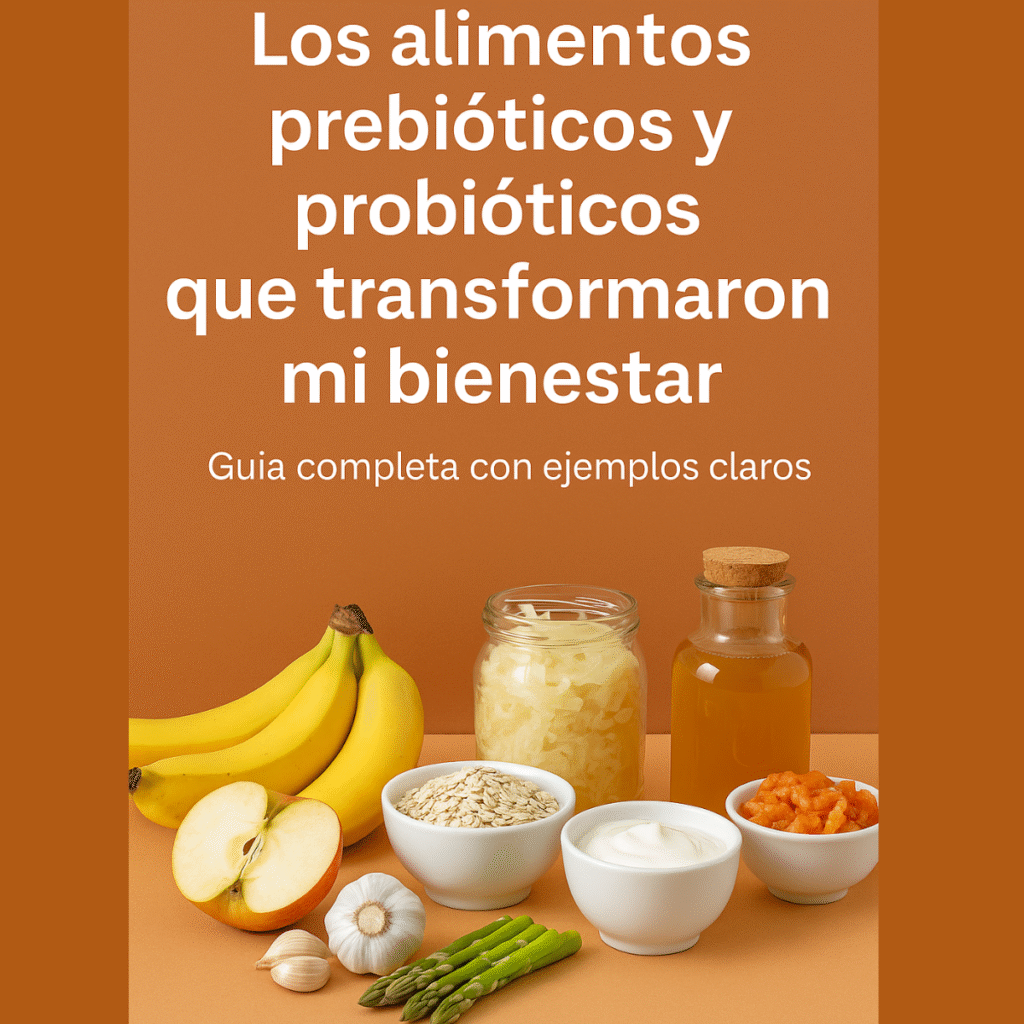
A few examples of prebiotics are ripe bananas, onions, garlic, and oats. Chances are you already have them in your pantry without realizing they’re invisible superheroes.
Probiotics: friendly bacteria working for you
Probiotics are live microorganisms, good bacteria that reach your gut when you eat them and help keep your intestinal flora in balance. Think of plain yogurt, kefir, or sauerkraut. They all contain bacteria that may support your immune system, help with digestion, and possibly even play a role in your mood.
Now that you know what I’m talking about, let me tell you something. I used to be the kind of person who drank digestive teas after every single meal, because I always felt heavy and thought that was the fix, even though the truth is they didn’t always work for me. Once I started adding prebiotics and probiotics to my diet more deliberately, little by little my body settled down, and I don’t feel nearly as heavy after eating anymore.
I realized this wasn’t about taking magic pills, it was about giving my body what it needed. I started with something as simple as one plain yogurt a day, plus bananas and oats at breakfast or as an afternoon snack. Within a few weeks I noticed more energy and less digestive discomfort. That was my own experience, of course, and everyone’s body responds a little differently.
Clear examples of prebiotic and probiotic foods
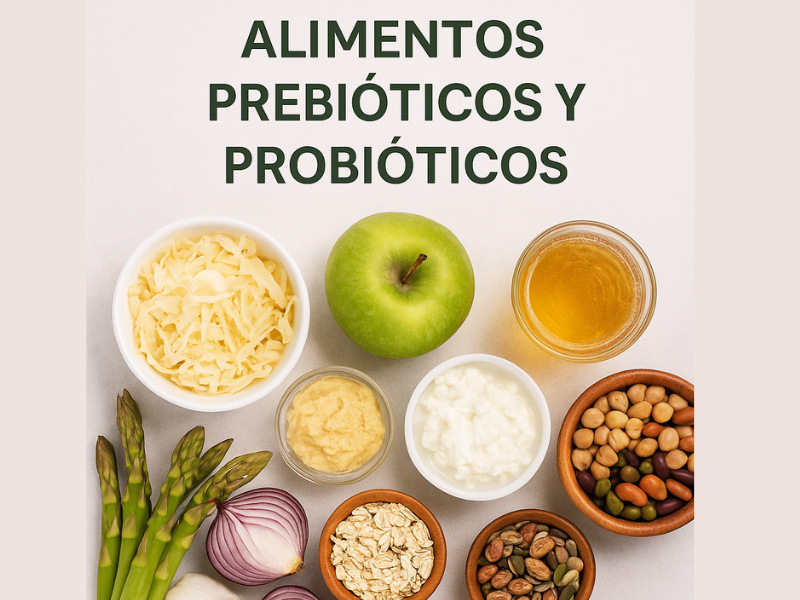
Examples of natural prebiotic foods
- Bananas (better if they’re a little ripe)
- Oats
- Onion and garlic
- Asparagus
- Artichokes
- Apples
- Legumes (chickpeas, lentils, beans)
Examples of natural probiotic foods
- Plain yogurt with no added sugar
- Kefir (milk or water)
- Sauerkraut (fermented cabbage)
- Kimchi (Korean fermented vegetables and spices)
- Miso (fermented soybean paste)
- Kombucha (fermented tea drink)
Benefits of adding prebiotics and probiotics to your diet
Easier digestion
As you start eating more of these foods, you may notice less bloating, less gas, and things moving along more comfortably. Plenty of people say they feel lighter, though it usually takes a few weeks and it doesn’t work the same way for everyone.
Support for your immune system
As you probably know, a large share of our immune defenses lives in the gut, so taking care of it is a way of taking care of the rest of you. I’m not saying you’ll never catch a cold again, but a well-fed gut is one more thing working in your favor.
More energy
When your body absorbs nutrients well, everything tends to run a little more smoothly, and quite a few people say they feel more energetic once their digestion settles.
Emotional wellbeing
Did you know that much of the body’s serotonin, the so-called happiness hormone, is produced in the gut? Researchers are still untangling exactly how the gut and mood talk to each other, but the connection is real enough that it’s worth feeding your microbiome well.
Healthier looking skin
If none of the above has convinced you, I’ll add that many people find their skin looks calmer and brighter when their digestion is in a good place. Skin has a lot of factors behind it, so think of this as a nice bonus rather than a guarantee.
How to start working prebiotics and probiotics into your meals
There’s no need to do everything at once, and I’d bet you already eat plenty of these foods on a regular basis. Either way, here are a few easy ideas:
- Have plain yogurt with oats and banana for breakfast.
- Add onion and garlic to the sautéed base you already make.
- Try a small glass of kefir a few times a week.
- Work legumes into your week, ideally two or three times.
- Be brave and put sauerkraut or kimchi on the side of your plate.
Frequently asked questions
Can I have too many?
Yes, going overboard can cause digestive discomfort. The best approach is to add them to your diet gradually.
Do supplements in capsule form work?
They can help, but they’re no substitute for a balanced diet built on real food.
Are they suitable for everyone?
Generally yes, though if you have a specific intestinal condition it’s worth checking with your doctor first.
Can I combine them in the same meal?
Yes, in fact it’s a good idea. Pairing a probiotic with a prebiotic gives those bacteria something to eat as soon as they arrive.
What if I’m lactose intolerant?
There are lactose-free probiotics, such as water kefir, miso, or kimchi. You just have to do a little digging
Tips for keeping your gut microbiome happy
- Eat a varied diet: the more types of fiber and good bacteria you include, the better.
- Cut back on ultra-processed foods and sugar, since they don’t do your gut microbiome any favors. If they make up most of your diet, you’re working against the prebiotics and probiotics you’re adding.
- Drink water and stay hydrated, because water helps prebiotic fiber do its job.
- Take antibiotics only when you actually need them, since they clear out the bacteria causing your infection along with plenty of the good ones in your gut.
- Get moderate exercise: that plays a part in gut balance too.
Myths and truths about prebiotics and probiotics
Myth 1: All yogurts are probiotic
Not all of them are. Plenty of store-bought yogurts carry so much sugar and so many additives that they contribute very little in the way of beneficial bacteria. Read the label and go for plain yogurt with no added sugar and live cultures.
Myth 2: The more probiotics I take, the better
Nope. Overdoing it can lead to loose stools or digestive discomfort. The best approach is to go slowly and see how you feel. The key isn’t the quantity, it’s the consistency.
Myth 3: Prebiotics are the same thing as fiber
Not all fiber is prebiotic. Only certain specific fibers (like the fructooligosaccharides in onion or the inulin in artichokes) act as food for the good bacteria.
Myth 4: Drugstore supplements can replace food
They can help at certain moments, after a course of antibiotics for example, but they don’t replace a varied diet with fruit, vegetables, and naturally fermented foods.
Myth 5: Probiotics cure any gut problem
They may help with digestive comfort, but they’re no magic wand. If you’re dealing with intolerances, inflammatory conditions, or other issues, you need to talk to a doctor.
Myth 6: They only matter for digestion
Not quite. Researchers are also looking at how the gut microbiome relates to the immune system, mood, skin, and even weight. Its reach seems to go well beyond the belly, though much of this is still being studied.
A sample weekly menu with prebiotic and probiotic foods
This menu is just a guide and easy to adapt. The point isn’t to complicate your life, it’s to fit these allies into your day naturally. I’m only handing you a few ideas.
Monday
- Breakfast: plain yogurt with oats and banana.
- Lunch: salad with asparagus and chickpeas, dressed with olive oil.
- Dinner: onion and garlic omelet with sauerkraut on the side.
Tuesday
- Breakfast: kefir with strawberries and chia seeds.
- Lunch: stewed lentils with vegetables (carrot, onion, bell pepper).
- Dinner: cream of artichoke soup and whole wheat toast with thinned miso.
Wednesday
- Breakfast: apple and oat smoothie.
- Lunch: baked chicken with a lettuce and tomato salad plus kimchi.
- Dinner: scrambled eggs with asparagus and aged cheese.
Thursday
- Breakfast: plain yogurt with homemade granola and banana slices.
- Lunch: lentil salad with onion and bell peppers.
- Dinner: miso soup with tofu and vegetables, plus whole wheat bread.
Friday
- Breakfast: water kefir with a handful of nuts.
- Lunch: baked fish with a sauerkraut salad and a roasted potato.
- Dinner: cream of zucchini soup with garlic and a little kimchi on the side.
Saturday
- Breakfast: plain yogurt with oats and apple chunks.
- Lunch: brown rice with vegetables and legumes.
- Dinner: homemade pizza on a whole wheat crust with onion, mushrooms, and aged cheese.
Sunday
- Breakfast: kefir with banana and oats.
- Lunch: a roast, meat or vegetables, with a salad that includes sauerkraut.
- Dinner: plain omelet with an asparagus and kimchi salad.
Now it’s your turn
After reading all this, I want to ask you something: are you up for adding prebiotics and probiotics to your daily routine? Which of the examples caught your eye the most?
Tell me in the comments, because I’d love to hear about your experience and maybe even trade some new recipes. Remember: your story might inspire someone who’s standing exactly where you were a few months ago.
Prebiotics and probiotics are a lot more than a trend. They’re a real, accessible tool that can help us look after our health from the inside out. That said, this isn’t about obsessing or changing everything overnight, it’s about taking small, thoughtful steps.
What I found is that with a yogurt, a banana, a bit of oatmeal, and a spoonful of sauerkraut, I was already feeding my microbiome almost without noticing. That simple change left me feeling lighter, lifted my mood, and my skin even looked brighter. I have to admit that last part is what convinces me most to keep it up ^^
If you want to keep taking care of yourself from the kitchen, you might also like to learn a bit more about anti-inflammatory foods. Stop by that post and tell me what you think. See you in the comments ^